It was early morning, I was staring at my own reflection, and my concealer had already started to fade around my eyes. Not the soft fade of good makeup — the kind that makes you look tired before the kids are even awake.
I’d spent the previous evening reading every talc-free powder review I could find, because my skin had finally started to say no to anything gritty. The no-gritty rule is permanent now.
So here’s what I actually keep on my vanity, and what I’ve moved to the shelf.

Why talc-free, and why the base matters
Talc is a common filler in setting powders. It’s silky and it grabs oil, which is why it’s been in these products for decades. But a lot of people — including me — prefer to avoid it, either for ingredient preference or because our skin simply doesn’t like it.
When a brand formulates without talc, they replace it with something else: silica, mica, rice or corn starch, or synthetic polymers. And here’s the part most roundups skip: each base behaves differently on your face. The right one depends on whether your skin is oily, dry, or somewhere in between by mid-afternoon
Quick answer up front, then I’ll walk through each pick. For blurring and under-eyes, I go to Kosas Cloud Set. For a fine, flash-friendly loose set, Hourglass Veil. For the shortest ingredient list I trust, bareMinerals Original Mineral Veil. All three are marketed as talc-free by their makers, and all three are on my counter this week.
The three powders I actually use
Best for blurring: Kosas Cloud Set
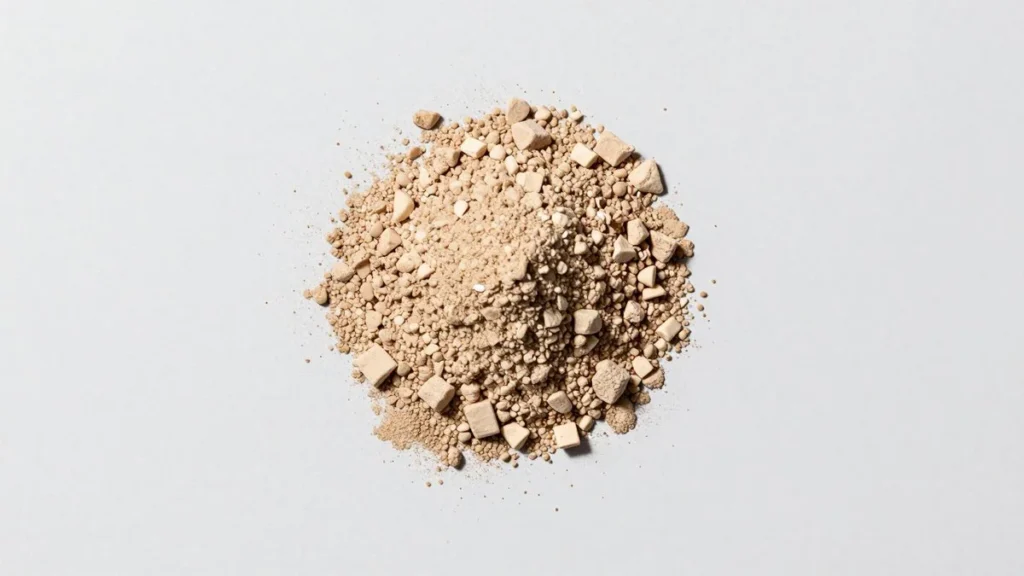
Cloud Set is a baked, talc-free powder. Mid-range price. The ingredient list leads with mica and silica, and it includes plant extracts the brand positions for oil and pore appearance. Baked powders are pressed from a loose blend, so you pick up a small amount on a brush and sweep it over the T-zone or under the eyes.
Why it’s on my list: it gives a soft-focus matte without a heavy powdery layer. For normal to combination skin, or anyone who wants blur without the chalk, this is the one I reach for.
The honest trade-off: silica-based powders can look dry on very dry skin. If your cheeks are tight by the afternoon, you’ll need a light hand and a good moisturizer underneath.
Best premium loose powder: Hourglass Veil Translucent Setting Powder
Hourglass formulates Veil without talc, parabens, fragrance, or nanoparticles, and it’s vegan. Premium price. The base is synthetic and mineral-based, and it’s starch-free — built from mica, alumina, boron nitride, and silica-type polymers.
It sets makeup finely and tends to look like skin rather than powder. If you’ve ever had that “why does this look cakey in photos” moment, this is the fix I reach for. It’s also the one I’d suggest for mature skin with texture concerns, applied sparingly.
Trade-off: it’s the priciest of the three, and a loose powder is messier to travel with. I keep it in a zippered pouch in my bag — no judgment.
Best short ingredient list: bareMinerals Original Mineral Veil
The loose version has a very short ingredient list: corn starch, zinc stearate, magnesium stearate. It’s been marketed as talc-free, and it gives a soft, skin-like finish rather than a hard matte. A pressed version also exists with a different formula that uses mica and silica with shea and cocoa butter.
Mid-range price. This is my pick for normal to dry skin, or anyone who wants a minimal formula and a light application. It’s the powder I’d hand to a friend who says “I don’t do makeup” but secretly wants to look a little more put-together.
Trade-off: corn starch is less oil-absorbing than silica. If you’re very oily, you may shine through sooner, and you’ll want to re-set midday.
How to pick without overthinking it
I used to read every ingredient list until I got a headache. Now I just check four things:
One. The base. Silica and mica give slip and blur, so they suit oily and combination skin. Starches feel softer and suit normal to dry skin. Alumina and polymers give a very fine, lightweight set.
Two. The talc claim. Talc may be listed as “talc” or as “magnesium silicate” (that’s the chemical name). If the front says talc-free, the back should agree.
Three. Loose or baked. Loose powder gives the lightest layer but needs a brush and a steady hand. Baked or pressed is easier to travel with and easier to control.
Four. Your skin tone and depth. Translucent powders can leave a pale cast on deeper skin, especially under flash. If that’s you, choose a tinted or deeper shade, or test the powder under bright light before you buy.
One more thing I learned the hard way: cost per use. A typical loose powder jar holds around 10 to 30 grams and lasts several months at a light daily dusting. A premium powder that costs three times as much but lasts twice as long can be competitive per use. So “expensive” isn’t always the wrong answer.
How I apply it (without the cakey finish)
This is the part that took me the longest to get right. Here’s my exact sequence:
Wait until your foundation is tacky, not wet. Tap off the excess powder on the lid or a tissue — this is the step everyone skips and the step that causes most of the “why do I look like a ghost” moments. Press the powder in with a sponge or puff on the T-zone and under the eyes, then sweep a fluffy brush over the rest. Skip the areas that tend to crease, like dry cheeks, unless you need the oil control. And finish with a mist of setting spray to melt the powder into skin.
No powder fixes a base that’s too thick. If your makeup looks heavy by noon, thin out the foundation instead of adding more powder. I learned this the expensive way.
Quick pick by skin type
Oily skin: silica or mica base. I reach for Kosas Cloud Set.
Combination skin: silica or polymer base. Hourglass Veil is the one I keep.
Normal to dry skin: starch base. bareMinerals Mineral Veil loose.
Mature skin, texture concerns: fine polymer base. Hourglass Veil, applied sparingly.
Budget: rice or corn starch. Any loose starch powder that lists no talc or magnesium silicate on the back works. This is the category I’m most honest about — a lot of drugstore options do exactly what a premium one does, for a fraction of the price.
Baking versus setting (for the curious)
Baking means leaving a thick layer of powder under your eyes for five to ten minutes so the warmth of your skin sets the concealer, then brushing it away. It works with fine silica or polymer powders and looks heavy with starch. Standard setting is a light dusting, which suits everyday wear and dry skin.
If you want to bake, choose a finely milled powder, use a damp sponge, and brush away every grain before you move on. I only bake for events. For the kids’ school play, a light dusting is plenty.
The Glow Ritual: one quick check before powder
Before you apply powder, press your ring finger gently against your cheekbone. If you feel a little tacky, you’re ready. If you feel dry and powdery, add a drop of moisturizer first, wait a minute, then apply powder only where you get shine. That single check has saved me from more cakey-makeup mornings than any product ever could.
FAQ
What’s the best talc-free setting powder?
For most people, it’s the one that matches your base. If you want blur and oil control, Kosas Cloud Set. If you want a fine, skin-like set, Hourglass Veil. If you want the shortest ingredient list, bareMinerals Original Mineral Veil. All three are talc-free and worth trying.
What replaces talc in setting powder?
Brands use silica, mica, rice or corn starch, tapioca, and synthetic polymers. Each one replaces talc’s slip and oil absorption in a slightly different way, which is why the base matters more than the label.
Is talc-free powder better for sensitive skin?
Not automatically. Sensitive skin reacts to many ingredients, including fragrance and certain minerals. Check the full ingredient list and patch test. If irritation continues, see a dermatologist — this is general cosmetic information, not medical advice.
A note from Johnson
I’ve bought enough pricey serums to know better, but powders are where I keep making small, honest choices. Talc-free isn’t a magic word — it’s just one ingredient you’ve chosen to leave out. What matters is that the one you pick works with your skin on the days it’s not cooperating.
Glow is a habit, not a product.
Written by Meredith Johnson
2 Comments