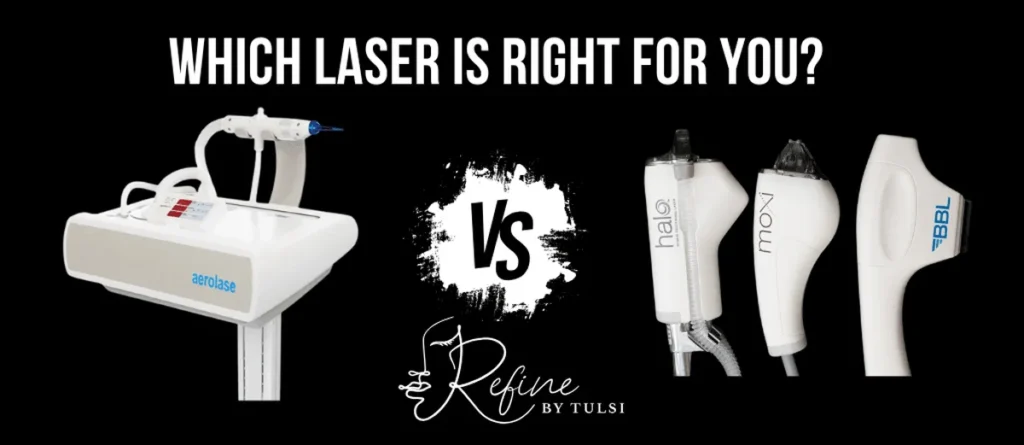
I was standing in front of my bathroom mirror last week, coffee mug in hand, staring at that familiar patch of redness on my left cheek. You know the one — it shows up after a hot shower, a stressful morning, or absolutely nothing at all. I’ve tried enough serums and treatments to know this isn’t something a bottle will fix.
So I did what I always do: I dug into the research on light-based treatments. And if you’re looking into Aerolase, IPL, or BBL for redness, sun damage, or pigmentation, you’ve probably noticed the same thing — three different names, three different acronyms, and a whole lot of marketing.
They sound interchangeable. They’re not. The technology behind each device determines how well it treats your concern, how comfortable it feels, how much downtime you’ll have, and whether it’s safe for your skin tone.
The One Thing That Actually Matters: Pulse Duration
Before comparing devices, there’s one concept to understand: pulse duration. It’s the single biggest differentiator between these treatments, and it controls everything — effectiveness, comfort, safety, and who can safely be treated.
Pulse duration is how long the device delivers energy per pulse. Think of touching a hot pan:
- Touch it for 3 seconds — you get burned. The heat has time to spread beyond where you touched into surrounding tissue.
- Touch it for a fraction of a second — warmth, no burn. Energy hits the target and dissipates before damaging anything around it.
This is exactly what happens in your skin. A longer pulse lets heat spread beyond the target (pigment, blood vessel, melanin) into surrounding tissue — causing pain, swelling, and risk of burns or post-inflammatory hyperpigmentation. A shorter pulse delivers energy precisely where it needs to go.
Here’s how they stack up:
- Aerolase Neo Elite: 650-microsecond pulse — far shorter than the others
- IPL: 10–30 milliseconds
- BBL: variable, but generally in the millisecond range
Aerolase’s ultra-short pulse means energy reaches the pigment or hemoglobin and is absorbed before significant heat can transfer to surrounding tissue. The result: effective treatment with less pain, less inflammation, less downtime, and safety across all skin tones — including Fitzpatrick IV–VI.
Side-by-Side Comparison
I’ve broken down the key specs so you can see what you’re actually paying for:
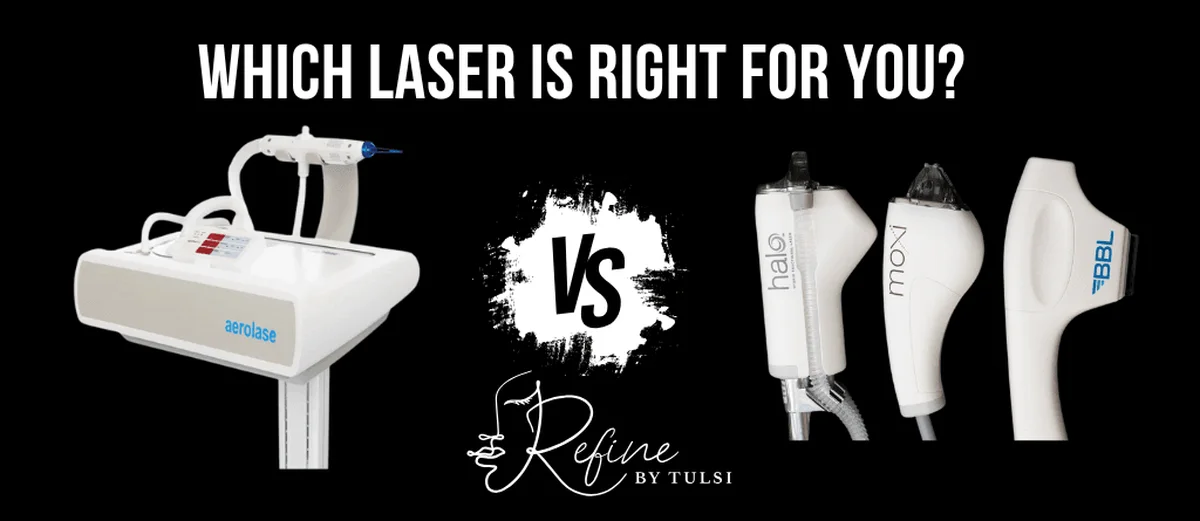
Aerolase Neo Elite
- Technology: 1064nm Nd:YAG laser
- Pain level: Minimal (warm sensation)
- Downtime: None
- Safe for dark skin: Yes — all Fitzpatrick types
- Treats: Redness, pigment, rosacea, acne, fine lines, veins
- Sessions needed: 3–6
- Starting at: $250/session
IPL (Intense Pulsed Light)
- Technology: Broad spectrum flashlamp
- Pain level: Moderate (‘rubber band snap’)
- Downtime: 2–5 days (darkening, crusting)
- Safe for dark skin: No — Fitzpatrick I–III only
- Treats: Sun damage, freckles, redness, brown spots
- Sessions needed: 3–6
- Price range: $300–$600/session
BBL (BroadBand Light)
- Technology: Enhanced broad spectrum (Sciton platform)
- Pain level: Moderate snapping sensation
- Downtime: 2–7 days (darkening, flaking)
- Safe for dark skin: Limited — Fitzpatrick I–IV with caution
- Treats: Sun damage, pigmentation, redness, fine lines
- Sessions needed: 3–6
- Price range: $400–$800/session
The Skin Tone Issue — Why This Matters More Than Anything
This is the one most clinics gloss over, and I think it deserves front-and-center attention.
IPL and BBL are not safe for medium to dark skin tones. It’s not a marketing claim — it’s physics. Broad-spectrum light delivers energy across multiple wavelengths, some of which are absorbed by melanin in the skin itself (not just the target pigment). In darker skin tones — Fitzpatrick IV–VI — this absorption can cause burns, blistering, and post-inflammatory hyperpigmentation. The exact problem you came in to fix.
Aerolase’s 1064nm wavelength has lower melanin absorption than the shorter wavelengths IPL and BBL use. Combined with that ultra-short pulse minimizing heat spread, it makes Aerolase safe and effective across all skin tones — a claim neither IPL nor BBL can make.
What Aerolase Treats That IPL and BBL Can’t (or Shouldn’t)
Rosacea. Aerolase is one of the most effective treatments for rosacea-related redness. The 1064nm wavelength targets hemoglobin in dilated blood vessels while the short pulse avoids triggering inflammatory flares that longer-pulse devices often cause. Many rosacea patients find IPL or BBL temporarily improves redness but makes their flare patterns worse — the heat triggers the very inflammation they’re trying to treat.
Active acne. Aerolase’s NeoClear protocol targets bacteria, inflammation, and sebaceous gland activity driving active breakouts. IPL and BBL are not designed for active acne. If you have breakouts alongside redness or pigmentation, Aerolase treats both at once.
Melasma. Melasma is notoriously stubborn and easily worsened by heat. IPL and BBL carry significant risk of triggering rebound hyperpigmentation in melasma patients. Aerolase’s ultra-short pulse minimizes heat accumulation, making it one of the safer light-based options for this condition.
Same-day combinations. Because Aerolase causes virtually no inflammation or skin barrier disruption, it can be paired with other treatments in the same session — microneedling, chemical peels, or HydraFacials. IPL and BBL usually can’t be combined on the same day.
When IPL or BBL Might Still Be the Right Choice
I believe in being honest about what works for whom. Here’s when IPL or BBL makes sense:
- You have very fair skin (Fitzpatrick I–II) with extensive discrete brown spots — IPL and BBL can aggressively target multiple sun spots in one session. The spots darken, crust, and flake off over 5–7 days.
- You want visible proof of treatment working. Some people prefer to see the darkening and shedding — it feels like evidence. Aerolase’s no-downtime approach can feel like ‘nothing happened’ even though pigment is clearing just as effectively over the series.
Which Treatment Should You Choose?
Choose Aerolase if:
- You have medium to dark skin (Fitzpatrick IV–VI) — it’s the only safe option of the three
- You have rosacea and need a treatment that won’t trigger flares
- You have active acne alongside redness or pigmentation
- You want zero downtime — no crusting, no darkening, no hiding
- You want to combine with other treatments on the same day
Consider IPL or BBL if:
- You have very fair skin (Fitzpatrick I–II) with extensive sun spots
- You prefer visible crusting and shedding as proof of treatment
- You’re comfortable with 2–7 days of social downtime
- You don’t have rosacea, active acne, or melasma
Real Patient Experiences
‘I’d been getting IPL at another clinic for sun damage on my cheeks. It worked — spots would darken and flake off — but I’d have a week of looking like my face was peeling. I switched to Aerolase and the same spots are clearing over a series of treatments with literally no downtime. I go during my lunch break. No one at work knows.’
— Patient, 45
‘I’m South Asian with Fitzpatrick V skin and I was told by two other clinics that IPL wasn’t safe for me. One actually turned me away. My provider treated my hyperpigmentation and rosacea with Aerolase and I had zero issues — no burns, no PIH, just gradual clearing over four sessions. Having a device that’s actually safe for my skin tone isn’t a luxury. It should be the standard.’
— Patient, 37
‘My rosacea got worse after IPL at another practice. The redness improved temporarily but the flushing episodes became more frequent and intense. I was switched to Aerolase and the flushing calmed down significantly. My baseline redness is lower and I haven’t had a major flare in months.’
— Patient, 51
Frequently Asked Questions
Does Aerolase hurt?
Most patients describe a mild warm sensation — significantly less than IPL’s ‘rubber band snap.’ No topical numbing is required. The 650-microsecond pulse delivers energy too quickly for pain receptors to fully register.
How many sessions do I need?
Most concerns require 3–6 sessions spaced 3–4 weeks apart. Mild redness or pigmentation may improve in 3 sessions. Rosacea, acne, and more significant sun damage typically require 4–6.
Can I go back to work immediately?
Yes — there’s no visible downtime. You may have mild pinkness for 30–60 minutes, similar to a light flush after exercise. No crusting, no peeling, no need to cancel plans.
Is Aerolase better than CO2 laser?
Different tools for different jobs. CO2 laser is more aggressive for deep wrinkles, severe textural damage, and advanced scarring — with 5–10 days of significant downtime. Aerolase is gentle, no-downtime treatment for redness, pigmentation, rosacea, and skin tone. Many patients use both.
Can Aerolase treat my body?
Absolutely. Common areas include neck, chest/décolletage (sun damage), hands (age spots), and legs (spider veins). Also effective for laser hair removal across all skin tones.
The Bottom Line
All three technologies can improve sun damage and pigmentation in fair-skinned patients. But when you factor in skin tone safety, comfort, downtime, versatility, and the ability to treat rosacea, acne, and melasma — Aerolase stands apart.
The Glow Ritual
Today’s 5-minute move: After your evening cleanse, press a warm (not hot) compress over any red or flushed areas for 2 minutes. It mimics the gentle heat response Aerolase creates — calming blood vessels and prepping skin for whatever treatment you choose.
Frequently Asked Questions — Quick Reference
If you have any skin tone darker than very fair → Aerolase (IPL and BBL are not safe).
If you have rosacea → Aerolase (won’t trigger flares).
If you want zero downtime → Aerolase (no crusting, no peeling).
A note from Johnson: I’ve spent enough money on ‘quick fixes’ to know that the best treatments are the ones you can actually fit into your life. Zero downtime isn’t a luxury — it’s what makes consistency possible.
Glow is a habit, not a product.