My evenings used to end the same way: couch, phone, “just a few minutes.” Two hours later I was still scrolling, wired and somehow more tired than before. Sleep suffered. My brain buzzed all the way into the next morning.
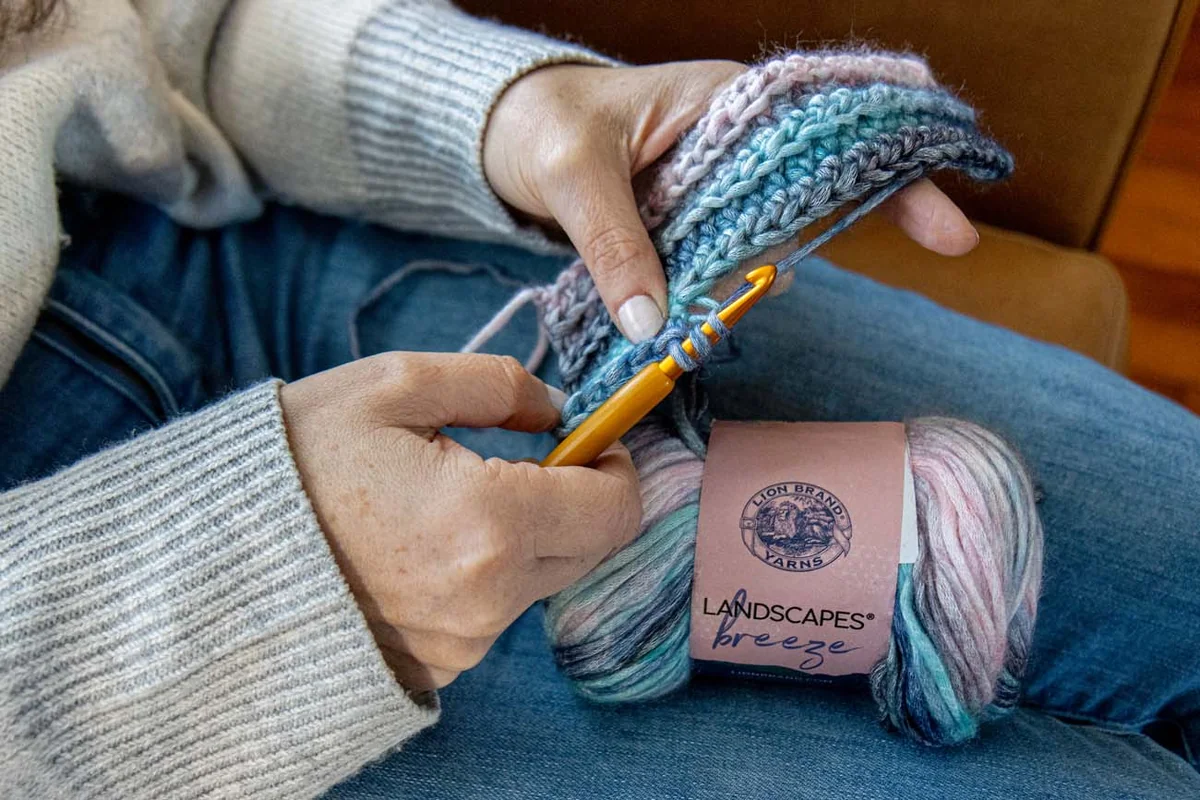
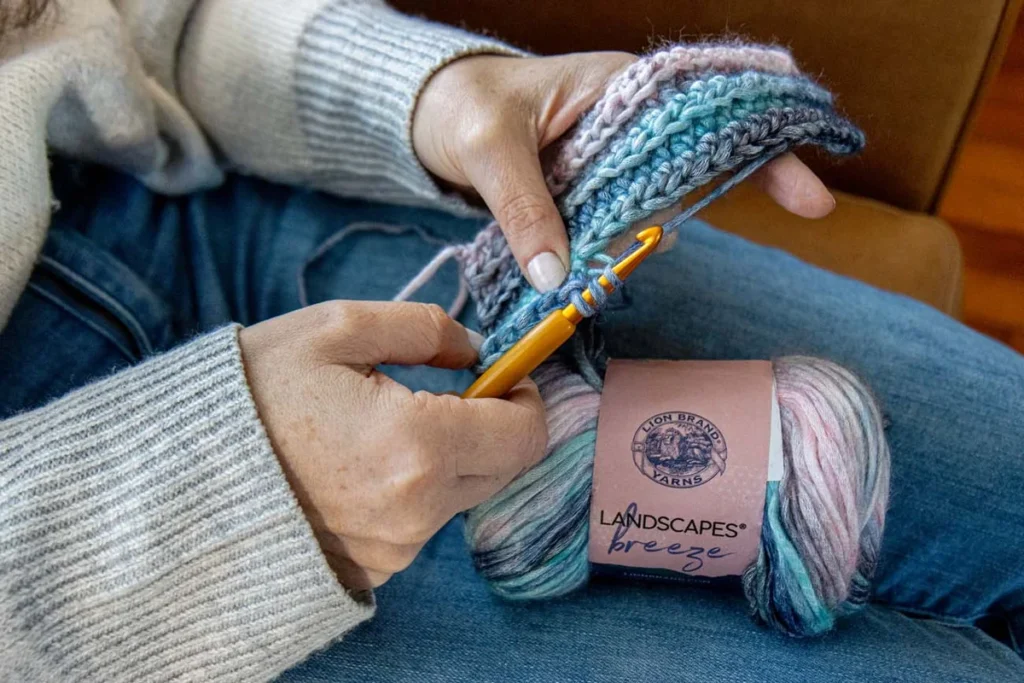
Two months ago I bought a beginner crochet kit from Lion Brand — the oldest yarn company in the U.S. — and taught myself to crochet. I went straight for their Log Cabin blanket kit because I loved the colors and it only requires one basic stitch. No one told me it would rewire how I spend my nights.
Here’s the thing: if you still picture knitting as grandma’s parlor hobby, you’re missing what’s happening. More than 60 million people worldwide knit or crochet now, and the cottagecore and grannycore trends have pushed chunky, oversized crochet into 2025 fashion. But the real reason people are picking up hooks again is less aesthetic and more practical: they want to unplug, and they want something their hands made.
The research says what my couch experiments confirmed
I’m not a scientist, but I read the studies before I believed the hype, and the numbers held up:
- In one study, knitting was associated with an 11 beats-per-minute drop in heart rate and reduced blood pressure — the body’s own markers of relaxation.
- Nearly 90% of the 8,000+ crocheters surveyed said crocheting makes them feel calmer.
- 82% reported feeling happier after crafting, with mood scores jumping during sessions. The creative accomplishment plus repetitive motion may support serotonin production.
- 61% of knitters surveyed reported better concentration and 58% noticed improved memory. Over half saw clearer thinking and better problem-solving.
- Nearly 75% said their craft made them feel more useful in daily life.
Those aren’t marketing numbers. They’re people who did what I’m doing: sat down, made something, and came out calmer.
Why a few stitches feel like a mini-meditation
Follow a pattern long enough and your hands start moving on their own while your mind settles into the present moment. Psychologists have compared stitching to a calming mantra — it quiets mental clutter. Many crafters describe a flow state where time simply stops being tracked.
Therapists have also noticed that the back-and-forth hand motion in knitting resembles the eye movements used in EMDR therapy, a technique for processing stress. Either way, the rhythm gives your nervous system a reason to slow down.
And there’s a built-in digital detox: you can’t scroll while juggling yarn and a hook. For me, that’s been the biggest win. When I sit down to work on my blanket, my phone stays face-down on the coffee table. Not “trying to use it less.” Fully offline.
Knitting or crochet? Pick the one you’ll actually do
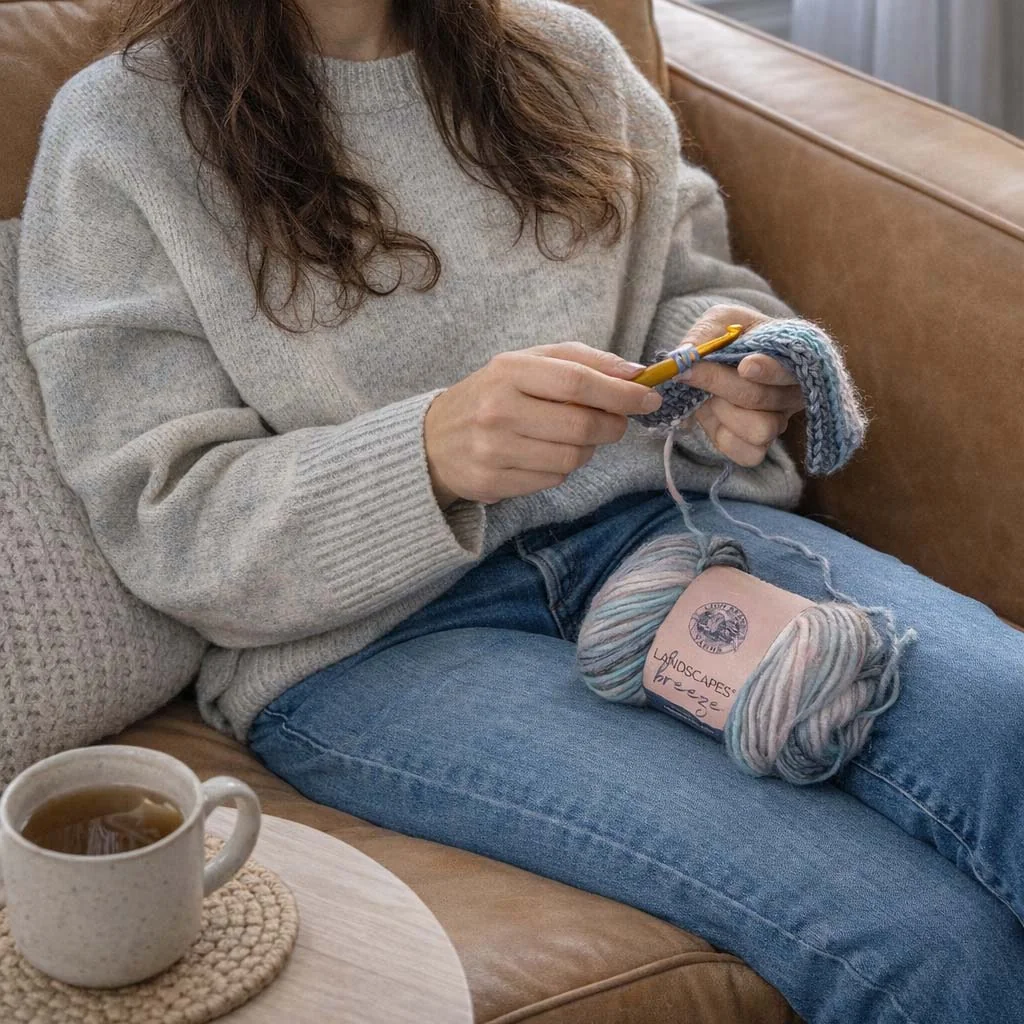
Good news first: research shows no significant wellness advantage of one over the other. The benefit is in the doing, not the technique.
They do have different personalities:
- Crochet uses one hook and a single active loop. It’s beginner-friendly, progress shows up fast, and mistakes are easy to fix — you can undo a few stitches without losing the whole row. It’s great for blankets, home décor, and amigurumi (stuffed toys).
- Knitting uses two needles with multiple active stitches. It makes stretchier, flowy fabrics perfect for sweaters and socks, and many knitters find the rhythm meditative once the basics click. Fixing mistakes is harder, and it uses less yarn overall.
Most beginners I read about found crochet easier. Some genuinely prefer knitting’s neater look. Both are fine. The right one is the one you’ll do consistently — browse project galleries, see which finished pieces pull you in, and start at a “Beginner” or “Beginner+” skill level.
Disclosure: a few product links below are affiliate links — I earn a small commission if you buy through them, at no extra cost to you.
Two months in: the blanket, the numbers, the nights
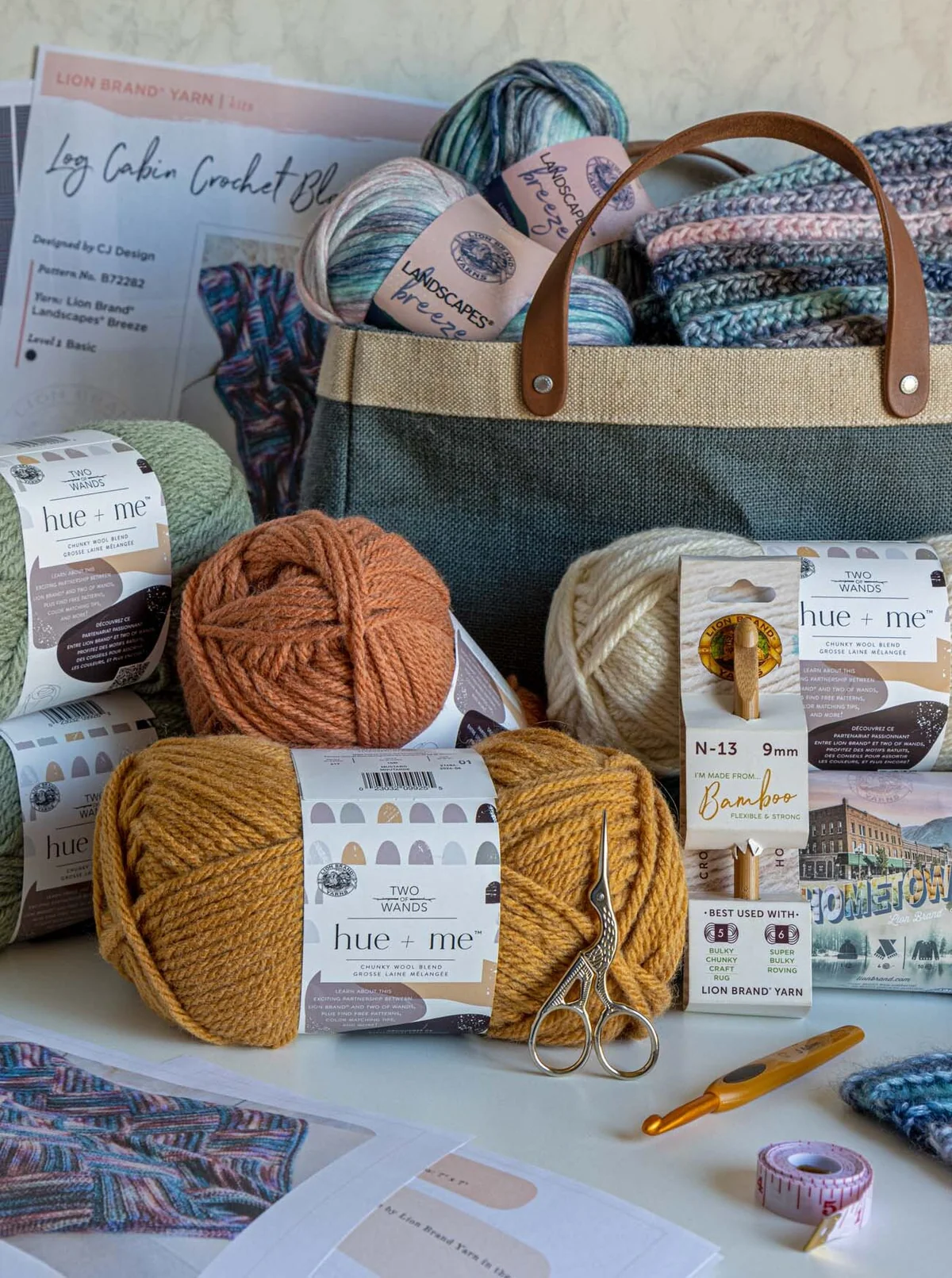
I’ll be honest: I didn’t start small. I skipped scarves and dishcloths and went straight to a blanket made of 40 squares. The kit cost about $70 and came with the yarn, a size 6 crochet hook, and clear pattern instructions — no guesswork about what I needed. The recommended yarn color was sold out (popular project), so I went with Seashell, a palette that shifts through soft coastal tones. When I felt the yarn out of the package, I knew I’d picked right.
The first square took me a whole day. Now, two months in, I finish two squares in an evening. That visible, hold-in-your-hands proof of progress is weirdly satisfying.
Every night around 8 PM I settle in with music or a show and crochet for about two hours. My phone stays down. My family has already started requesting blankets as gifts.
The changes I’ve noticed are specific:
- Sleep: I fall asleep faster and sleep more soundly. My brain isn’t buzzing with two hours of feed noise.
- Calm: The repetitive motion really does lower my pulse and breathing. I can confirm the “meditative” label from the research.
- Accomplishment: Every finished square is proof I started something and finished it. That matters more than it sounds.
- Focus: Following a pattern is problem-solving, counting, and attention — all while relaxing.
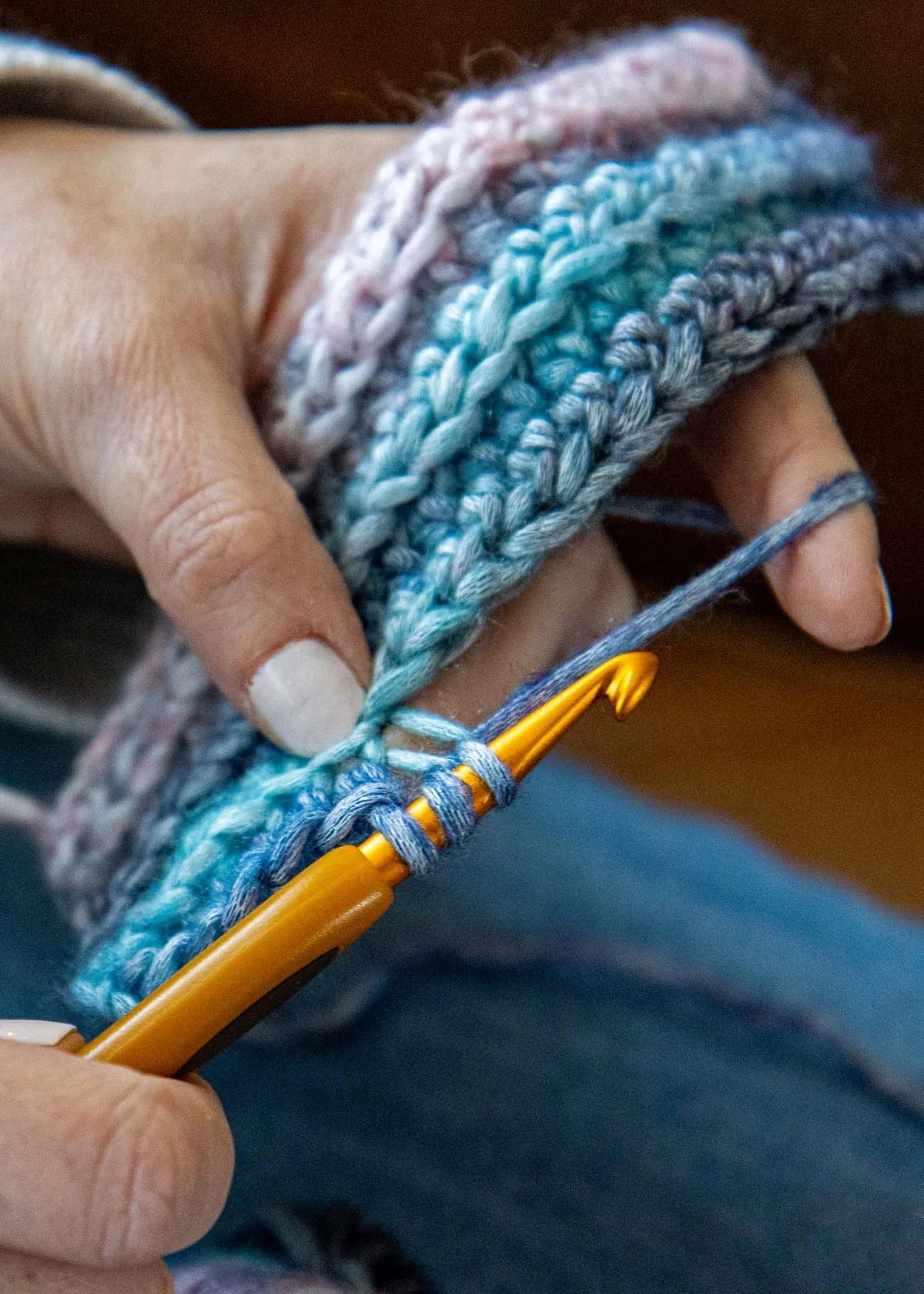
There’s also a cognitive angle. Researchers call it “cognitive reserve” — the brain’s built-in resilience, the ability to keep working even with age-related wear. The idea surfaced in the late 1980s, when scientists noticed people with signs of Alzheimer’s showing no symptoms in daily life. Their reserve helped them cope, like traffic rerouting around a blocked road. Learning new stitches and counting pattern rows builds exactly that reserve, and it’s believed to help protect against age-related decline like increased forgetfulness or slower processing. The best part: it doesn’t feel like brain training. You’re making something, and your brain works in the background.
For anxiety specifically, one crafter put it perfectly: “While my hands are busy doing something, my mind slows to a crawl, and I am actually able to think about one thing at a time, rather than having 20 to 30 threads all going at once.” That’s the anchor — your attention has somewhere specific to go, the counting gives your mind something concrete to track, and the growing fabric shows you progress you can see.
How to start without overthinking it
- Start small (unless you’re excited about something big). A dishcloth, coasters, or a simple scarf finishes in days, not months. Quick completion builds confidence and muscle memory. I made a headband in a single afternoon once my squares got easy. If you’re genuinely excited about a bigger project, go for it — excitement sustains motivation.
- Get a kit. Beginner kits bundle the yarn, hook or needles, and a clear pattern, so you don’t waste a week figuring out what you need. Lion Brand’s beginner crochet and knit kits are the ones I’d point you to — the full kit breakdown here.
- Use the free video library. When my edges kept going wonky, a short tutorial showed me exactly what I was doing wrong. Clear, well-made tutorials turn a steep learning curve into a gentle one.
- Choose yarn you like working with. Scratchy yarn turns crafting into a chore. If you swap colors or brands, keep the same weight the pattern calls for. I’m working with Landscapes Breeze, and the color shifts make even simple squares look interesting.
- Make it a ritual, not a project deadline. Two hours most evenings became my wind-down signal. But even 20 to 30 minutes will shift your mental state. Consistency beats marathon sessions.
- Track progress. Photograph your work-in-progress. Looking back at your first square next to your latest one is its own form of self-care.
The Glow Ritual
Tonight: put your phone in another room. Find 20 quiet minutes. Pick up a hook — or even just a ball of yarn and nothing else — and do one thing with it: a foundation chain, a few stitches, counting out loud. That’s it. Your brain will notice the difference by morning.
Frequently asked
Do I need to be good at it to get the wellness benefits?
No. The benefits come from the rhythmic repetition and focused attention, not from skill level. Your first square will be lumpy. It still counts.
Is crochet really good for anxiety?
Many people use it as a self-soothing tool — the structure and counting give racing thoughts somewhere to land. It’s not a substitute for professional treatment, but for everyday low-grade anxiety, the research and personal reports both point in the same direction.
How long before I notice a difference?
I noticed calmer evenings within the first week. Sleep and focus improvements came more gradually. Give it a few weeks of consistent practice before judging whether it works for you.
a note from Johnson: I’ve bought enough $90 serums to know when a product is doing the work and when I’m just enjoying the ritual. Crochet is the ritual. The blanket is the bonus. I’d trade a dozen nights of scrolling for this any day.
Glow is a habit, not a product.