
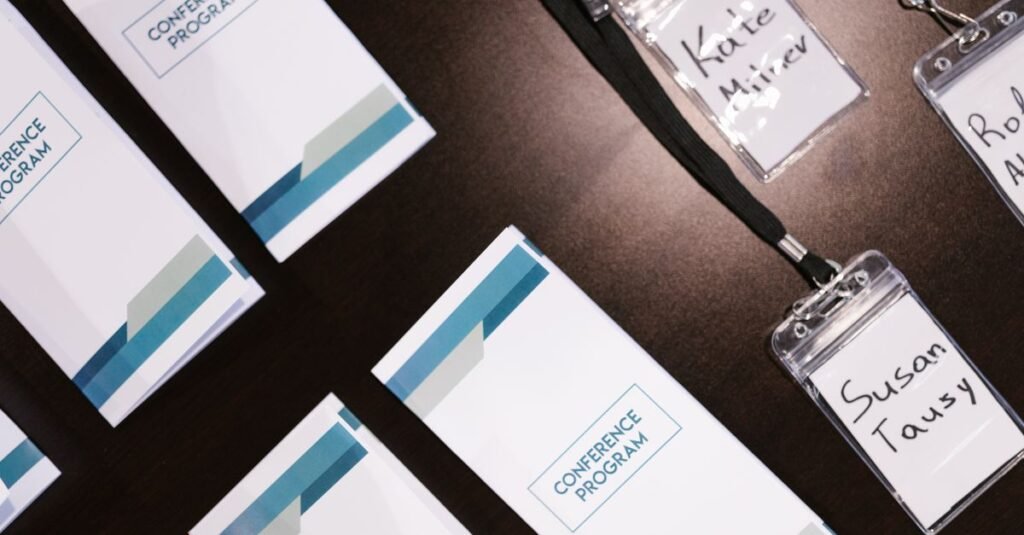
There’s a moment at every event I dread more than the small talk itself. Someone walks up smiling, says your name back to you with perfect confidence — and you stand there holding a face, a whole conversation you remember word for word, and zero idea what to call them.
I know this feeling better than I’d like to admit. I remember the meeting, the company, a detail about their family, maybe even the restaurant we were sitting in. The name? Missing. Right when I need it.
It doesn’t happen all the time. But when it does, you get a few seconds to decide: ask, pretend, search for clues, or carefully build every sentence so it never requires a name at all. In this post, I’ll walk through the exact situations — with lines you can actually use — plus the mistakes I’ve watched people make that turn a small lapse into an evening of awkwardness.
Why Your Brain Keeps the Face but Loses the Name
Here’s the thing: you’re not bad at remembering. You’re just fighting the way names work. Psychologists Lise Abrams and Danielle Davis reviewed the research and found that names are labels with almost no information attached to them. Knowing someone is a dentist tells you something real about who they are. Knowing their name is Jennifer tells you nothing.
There’s a classic experiment behind this: people who saw a face and heard that the person was a baker remembered it far more easily than people who saw the same face and heard the surname Baker. Daniel Willingham, a psychology professor at the University of Virginia, put it plainly — an occupation carries meaning. A name may connect to nothing at all.
And at the exact moment of introduction, your attention is split. You’re preparing your own answer, reading the room, wondering if you’ve met before, and trying to look composed. It’s no wonder the name slips away.
What to Say in Each Situation
Because this is a people problem, not a theory problem, I’m giving you scripts. Real ones, the kind I’ve actually used.
They Greet You by Name After Meeting Once
“Meredith! It’s so good to see you again.” You remember the face and even bits of the last conversation. Not the name.
Acknowledge what you genuinely remember, then ask before you’re a few minutes into the conversation:
“It’s good to see you too. I remember we met at Daniel’s event, but I’ve blanked on your name. Remind me?”
Or if you remember the topic, not the setting: “I remember our conversation about your trip, but your name has escaped me. Help me out?”
One remembered detail is worth more than a polite nod — it proves you were listening. And once they answer, use the name right away: “Megan, yes — how did the trip go?”
You’ve Met Several Times and the Name Is Still Gone
After a third meeting, “I didn’t catch your name” doesn’t fly. Pretending you haven’t heard it before can feel more dismissive than just admitting the lapse.
What I’d say: “I should know this by now, and I’m sorry — I’m just not good with names, and yours has slipped. Tell me again?” For a warmer relationship: “I know you’ve told me before. I don’t want to spend another whole conversation avoiding your name, so please remind me.”
Willingham made a point I’ve thought about a lot: people understand that names are hard, and they still get hurt when theirs is forgotten. We quietly connect memory with importance. So skip the long speech about how busy you’ve been. Listen, repeat the name once, and anchor it to what you already remember: “Rebecca from the trip — of course.”
They Walk Up and Use Your Name Immediately
Yes, hearing your own name when you don’t know theirs is a little uncomfortable. Own the moment.
Respond to the greeting first — “Hi, it’s so good to see you” — which buys you a second to place the face. If the name still won’t come, go direct before the conversation gets deeper:
“I remember meeting you at the workshop, but I seem to have lost your name. Can you tell me again?”
If you can’t place where you met either, say so honestly: “I recognize you, but I can’t place where we met or remember your name. Help me out?” And more often than you’d think, they’ll say, “We sat together at Maria’s birthday” — and everything comes back at once.
You Need to Introduce Them to Someone Else
I know one person who can sail through an entire event without ever catching a name, simply by hoping someone else will say it first. It works — until it doesn’t.
In a professional setting, I choose accuracy over cleverness: “I want to introduce you properly, but I can’t remember your name — remind me?” Then continue immediately: “Laura, this is my colleague Daniel. Daniel handles our research projects.”
That only works if you’re not three hours into pretending you know. Which is the real lesson: admit it early, every time.
In casual settings, introduce the person whose name you know first: “Have you met my friend Michael?” The other guest often answers with their own name. If they just say, “No, I haven’t”, and look at you for the rest — be sincere and ask.
Remember the first name but not the last? Make the request specific: “Emma, remind me of your last name so I introduce you correctly.”
And the best move I’ve found: check with a mutual friend before the introduction. You can use that trick even when you’re not introducing anyone. If you see a familiar face across the room and want to say hello but can’t remember the name, just ask the person you’re with: “I have such a memory lapse — can you remind me of that woman by the window? I know we met here last time, but her name has been on my mind all evening.”
You Heard the Name but Didn’t Catch It
Noisy room, unfamiliar name, a quick introduction — it happens more than people admit. The simplest fix is to ask right at the start:
“I didn’t catch your name — could you say it again?”
If you heard it but aren’t sure of the pronunciation: “Did I say that right — Niamh?” or “Could you pronounce it once more? I want to get it right.”
Ask early rather than guessing wrong for ten minutes. (I’ve done that with a client from another country, and it took a week to fully recover.) A 2025 TIME piece with etiquette and communication experts landed on the same advice: ask directly instead of silently rebuilding the name in your head.
One more thing — I never use a nickname or a shortened version. It can land as slightly offensive. Some clients struggle with my own name, so I offer them the easy one. That’s the move: give them the short version, don’t just take it.
You Remember the Face, the Story, the Spouse — Just Not the Name
This is actually the friendliest version of the problem. You can prove you were paying attention — it’s just the label that’s missing.
“We met at the conference, and you told me your son wanted to study engineering. I remember that conversation so well — I just lost your name.”
One relevant detail is enough. Don’t recite everything you know about them — it can start to sound like you’re defending yourself, and honestly, a little unsettling. Then, once they answer, reconnect through the detail: “Claire, thank you. Did your son decide where he wants to apply?” The conversation moves forward from something real, instead of circling your memory.
What Not to Do for the Next 15 Minutes
The effort of avoiding someone’s name is visible. You stop using direct address. You hope someone else will say it. You invent questions that might reveal it. You get distracted because half your brain is still searching. The person across from you notices.
So here’s the avoid list I keep in my head:
Don’t guess confidently. Calling Catherine “Caroline” all evening creates a second problem — especially if she’s too polite to correct you.
Don’t ask for the spelling as a stunt. It can work with an unusual surname. It fails spectacularly when the answer is “J-O-E.”
Don’t hand over your phone and ask them to type in their details with no real reason. I’ve heard it suggested as a trick. I’ve never once used it myself.
Don’t turn it into a judgment on yourself. “I’m hopeless, my brain is terrible, I never remember anyone” — now they’re comforting you instead of just telling you their name. One light “I’m so bad with names” is fine. More than that is a performance.
Don’t say they look different. Blaming a haircut, glasses, or weight change makes a small moment considerably bigger.
And keep the explanation after the question short. A detailed account of your calendar, your exhaustion, and your lifelong naming struggles turns a three-second lapse into an entire speech. “I’m sorry, I’ve blanked on your name” is more than enough.
What If You Say the Wrong Name?
Correct yourself the moment you notice: “Sarah — sorry, Laura.” Then keep talking. Don’t stop the whole conversation to apologize.
If you’ve mixed them up with someone they know: “I’m sorry, I confused your name with your colleague Sarah’s.” Avoid saying they look alike unless it’s genuinely relevant.
A pronunciation slip works the same way — ask, say it back once, use it correctly from then on. Laughing at the name, or announcing it’s “impossible to spell,” hands your discomfort over to the person who owns the name.
How to Make the Name Stick Next Time
A few habits I’ve built over the years, all of them small:
Listen before you prepare your own introduction. While someone is saying “I’m Rachel,” a lot of us are already composing our name, our handshake, our opening question. The name goes in one ear and out the other. Listen first.
Say it once, in a sentence. “Nice to meet you, Rachel” gives you a second chance to hear and say the name. After that, let it be. Repeating it over and over actually makes it feel stranger.
Connect it to something that means something. “Rachel from the design team, heading to Denver next month” — now the name has a home in your memory.
Write a real note after professional events. Not just a list of names. “Laura Bennett — met at the conference — works with Daniel — planning a trip to France.” A bare list of names is just as useless the next time you see them.
Review before the next meeting. A calendar invite, an email thread, a participant list — two minutes of checking who will be there can save you the moment a client greets you warmly and you realize you can’t retrieve her name.
The Glow Ritual
This week, at your next gathering, do one thing only: after an introduction, say the person’s name back in one short sentence before the conversation moves on. “Nice to meet you, Rachel.” That’s it. One repetition, right away. You’ll be amazed how many names quietly start to stay.
FAQ
What should I say when I forget someone’s name?
Say, “I’m sorry, I’ve blanked on your name — remind me?” If you remember where you met or what you talked about, mention one detail before asking. It shows you remember the person even though the name is temporarily missing.
What if they remember my name but I don’t remember theirs?
Acknowledge the greeting, then ask before the conversation moves too far: “It’s good to see you. I remember meeting you at the conference, but I’ve forgotten your name.” The fact that they remember yours doesn’t mean you have to pretend.
How do I ask after meeting someone several times?
Own it: “I know you’ve told me before, and I’m sorry — your name has escaped me again. Please remind me.” Listen carefully, repeat the name once, and note it with enough context that you can review it before you meet again.
Is it rude to forget someone’s name?
They may feel a little hurt, especially if you’ve met before — and pretending can feel worse than the lapse itself. A short apology, a direct ask, and genuine attention once they answer handles the moment better than any elaborate excuse.
Why do I remember a face but not the name?
Names carry almost no information that connects them to a face. Research has found people remember biographical details and occupations far more easily than names — which is exactly why you can recall the whole conversation and still lose the label.
A Note from Johnson
I used to treat a forgotten name like a personal failure — proof I wasn’t paying attention. It took more than two decades of conferences to learn it’s just how names work. The fix was never a bigger brain. It was asking, early and without ceremony.
Glow is a habit, not a product. So is remembering people.